
What You Must Know Before You Order Kratom in Canada
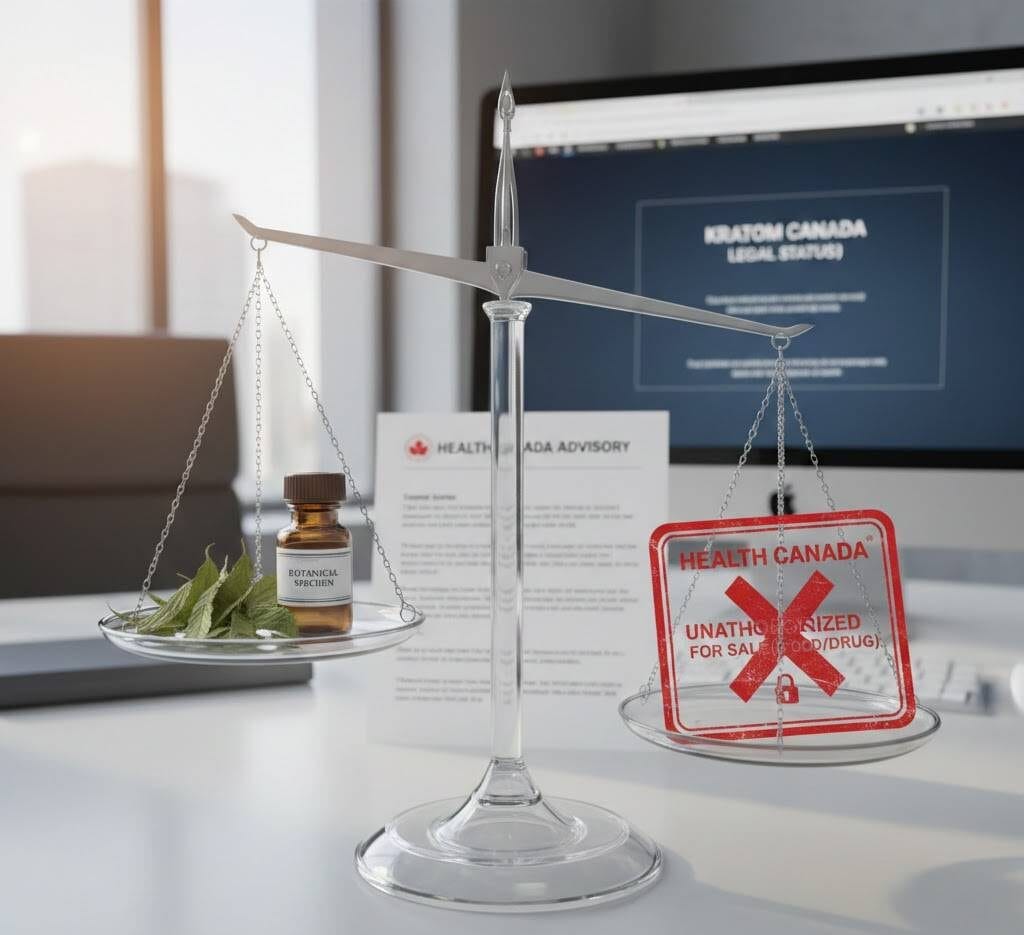
Here is your comprehensive guide to Health Canada’s current stance, what it means for your personal use, and how to choose a reputable supplier like Kratom Delivery Canada.
Table of Contents
Health Canada's Stance on Kratom
The landscape of kratom in Canada is unique, often described as a legal grey area. For Canadian consumers seeking this botanical, understanding the official position of Health Canada is not just recommended—it’s essential for safe and responsible purchasing.
Kratom’s Legal Status in Canada: The Key Distinction
If you’re asking, “Is kratom in canada legal to possess?” the short answer is yes, for personal use and possession, it is generally considered legal. Kratom (or Mitragyna speciosa) is not listed as a controlled substance under the Controlled Drugs and Substances Act (CDSA).
Considerations for 2026
While possession is legal, the regulatory landscape remains nuanced:
Consumption vs. Possession: Health Canada has not authorized kratom for human consumption. While you can legally own it, it cannot be marketed or sold as a natural health product, supplement, or food item.
Vendor Compliance: You will often see kratom sold with disclaimers such as “not for human consumption” or “for research purposes” to comply with Canadian labeling laws.
Travel: It is generally permitted to travel with kratom for personal use within Canada, though keeping it in original packaging with any available lab reports is recommended to avoid delays at security checkpoints.
In summary: You can legally possess kratom, but vendors cannot legally sell it to you as a consumable product.
Health Canada’s Official Warnings and Safety Concerns
Health Canada has issued advisories regarding kratom, focusing on potential health risks and safety issues. It is crucial to be aware of these official warnings:
- Potential Health Risks: The agency warns that kratom contains psychoactive ingredients (specifically the alkaloids mitragynine and 7-hydroxymitragynine) that can have both stimulant-like and narcotic effects. Reported side effects can include nausea, vomiting, drowsiness, liver toxicity, seizures, and the potential for dependence or abuse with chronic use.
- Unapproved and Unregulated Claims: Since it is not an approved NHP or drug, any vendor advertising kratom as a treatment or cure for any disease or ailment is operating illegally and making misleading claims.
- Contaminants: The agency has, in the past, seized unauthorized kratom products due to concerns about contamination, including the presence of heavy metals or harmful bacteria like Salmonella.
This is why choosing a supplier committed to Lab-Tested Quality is paramount. A trustworthy vendor mitigates the risks associated with product quality and purity, which is one of Health Canada’s primary concerns.

How to Order Kratom Safely in Canada: Tips for Consumers
Given the regulatory environment, your choice of vendor is the most important factor in a safe and positive experience.
1. Check for the Right Labeling and Claims
A reputable vendor will never sell kratom as a dietary supplement or make outright health claims. Look for disclaimers like “Not for Human Consumption.”
2. Prioritize Third-Party Lab Testing
Quality assurance is your best defense against contaminants. Only purchase from vendors who provide proof of independent, third-party laboratory testing for purity, heavy metals, and alkaloid content.
3. Understand Your Shipment Limits
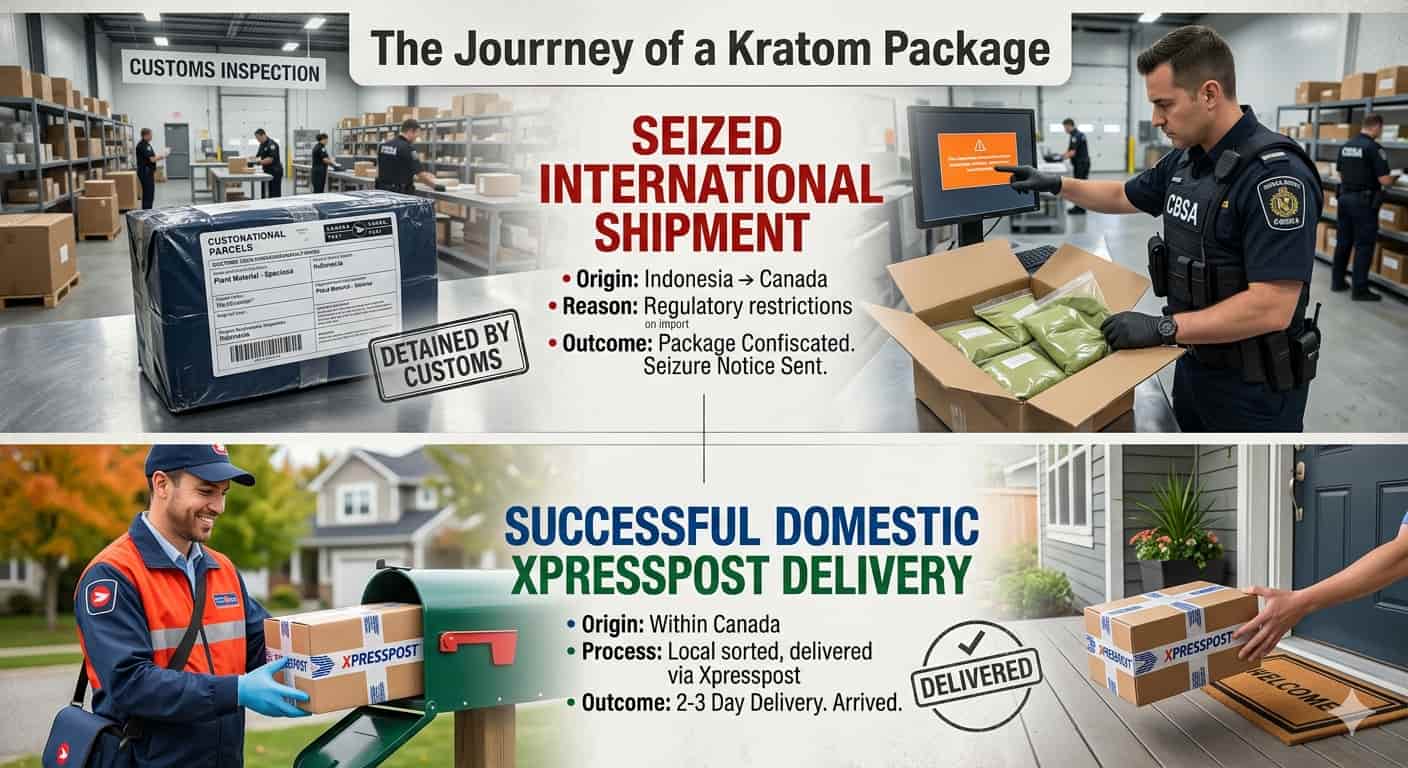
While you can possess kratom, Canadian Border Services Agency (CBSA) and Health Canada guidelines generally limit personal importation (from outside Canada) of health products to a 90-day supply. Always check the latest import regulations. When purchasing domestically from a compliant Canadian vendor, this is less of a direct concern, but it underscores the principle of responsible personal use.
4. Stay Informed
Kratom’s legal status is a dynamic issue. Reputable vendors and advocacy groups track legislative changes. Ensure your supplier is actively compliant with current laws.
Exploring Kratom Strains
Kratom is typically categorized by the vein colour of the leaf, which is often associated with different reported effects. Knowing the strains can help you choose a product that aligns with your specific needs:
Strain Type | Characteristics (Reported) |
Red Vein | Generally reported for relaxation, calming effects, and potential use for discomfort. |
Green Vein | Often described as a balance between red and white strains, providing moderate energy and a sense of well-being. |
White Vein | Typically associated with stimulating effects, increased energy, and focus. |
Maeng Da | A term often used for a potent or high-quality strain, which can come in red, green, or white varieties. |
Your Trusted Canadian Source
At Kratom Delivery Canada, we specialize in delivering premium kratom powder while maintaining the highest standards of quality and transparency that align with the required Canadian regulations.
Our Kratom Products | Details |
Lab-Tested Quality | Every batch is tested for purity and safety to ensure you receive clean, high-quality kratom. |
Fast Same-Day Shipping | We ship all orders the same day, so you get your kratom quickly anywhere in Canada. |
Secure Payments | Pay easily with secure e-transfer details at checkout for quick, simple payment. |
Ready to find a high-quality, responsibly sourced botanical?
Frequently Asked Questions (FAQs)
Q1: Is kratom federally illegal in Canada?
No. Kratom is currently not scheduled under the Controlled Drugs and Substances Act (CDSA), meaning possession and personal use are not federally illegal. However, the sale for human consumption is unauthorized by Health Canada.
Q2: Why do Canadian vendors label kratom as “not for human consumption”?
This labeling is mandatory for vendors who wish to comply with Health Canada regulations. Since kratom is not approved as a food or health product, selling it with this disclaimer is a way to comply with the law that prohibits its sale for human consumption or as a drug.
Q3: Can I travel with kratom inside Canada?
Yes, travelling domestically within Canada with kratom for personal use is generally permitted, as it is not a controlled substance. However, carrying proof of purchase and keeping it in its original, sealed packaging is always advisable.
Q4: Does Health Canada approve of kratom for medical use?
No. Health Canada has not approved kratom for any therapeutic, medical, or medicinal use and advises against consuming it due to unproven safety and potential health risks. Any seller claiming otherwise is operating outside of the law.
Q5: What should I look for to ensure I’m buying from a reputable vendor?
Look for a vendor that:
a) clearly labels products as “not for human consumption,”
b) provides third-party lab testing results for purity and safety,
c) does not make unsubstantiated medical claims, and
d) offers transparent business practices and customer service.
Government and Official Resources
For the most accurate and up-to-date information directly from official sources, please consult the following government resources:
- Health Canada Advisories and Warnings: Search the official Health Canada website for the latest advisories on kratom products to stay informed on their safety warnings. A direct, permanent link to a general kratom advisory may change, so search “Health Canada Kratom Advisory” on the Canada.ca website for the current notice.
- Government of Canada’s Position on Controlled Substances: Review the Controlled Drugs and Substances Act (CDSA) to confirm kratom’s status. It is generally not listed as a controlled substance. Search the Justice Laws Website for the “Controlled Drugs and Substances Act (S.C. 1996, c. 19)”.
- Importing Health Products for Personal Use: For details on limitations when importing products, including health products, into Canada. Search the Canada Border Services Agency (CBSA) or Health Canada website for the guidance document: “Bringing health products into Canada for personal use (GUI-0116)”.
Recent Posts
Best Practices for Using White Hulu Kratom
Dosage, Timing, and the "Less is More" Philosophy White Hulu Kratom...
Health Canada’s Stance on Kratom: What You Must Know Before You Order Kratom Canada
Is it legal to order kratom Canada? Yes, but with a...

Order Kratom Canada: Comparing Prices and Value from Top Suppliers (2026 Guide)
To safely order kratom Canada in 2026, prioritize domestic vendors who...